
Table of Contents
Introduction

In construction and manufacturing projects, the integrity of an entire project often hinges on its smallest components—fasteners. Bolt failure can lead to equipment breakdowns, safety hazards, and costly downtime. Therefore, selecting the right hex head bolts is not merely a detail, but a critical decision. At Haosheng, we meticulously design hex head bolts to be the most reliable link in your chain, ensuring strength, durability, and peace of mind. This comprehensive guide will help you understand everything about hex head bolts—from their material properties and grades to proper installation techniques and best practices.
What is a Hex Head Bolt?

Definition and Features
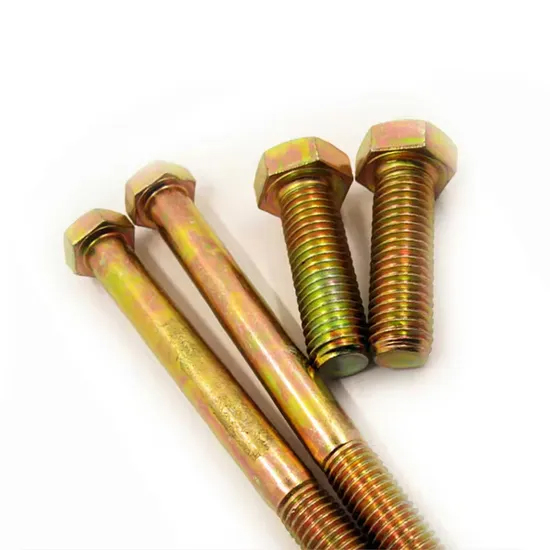
A hex head bolt is a type of fastener that has a hexagonal (six-sided) head, making it easier to grip and tighten with a wrench or socket. Its six-sided head design allows for high torque application, ensuring a secure and tight fastening. Typically used in structural, mechanical, and construction applications, hex head bolts are versatile and reliable for various heavy-duty uses.
Key Features:
- Six-sided hexagonal head for easy engagement with standard wrenches and sockets.
- Threaded shaft for secure fastening in nuts or threaded holes.
- High torque capacity compared to other bolt types.
- Available in a range of sizes and materials to suit different applications.
Materials of Hex Head Bolts
Stainless Steel vs. Carbon Steel
When selecting a hex head bolt, material is a key consideration that impacts its strength, durability, and resistance to corrosion. Below are the most common materials used in the manufacture of hex head bolts:
Stainless Steel:
- Corrosion Resistance: Stainless steel bolts resist corrosion, rust, and staining, making them ideal for outdoor, marine, and chemical environments.
- High Strength: Stainless steel offers a balance of strength and flexibility, making it suitable for both general and high-stress applications.
- Versatility: Stainless steel hex head bolts are used across a wide range of industries, including construction, automotive, and marine.
Carbon Steel:
- High Strength: Carbon steel hex head bolts are stronger than many other materials and are ideal for structural applications.
- Cost-Effective: They are more affordable compared to stainless steel, making them a popular choice for large-scale projects.
- Vulnerable to Corrosion: Without proper coating or plating, carbon steel bolts are prone to rust when exposed to moisture.
Material Comparison:
| Material | Corrosion Resistance | Strength | Cost | Common Applications |
|---|---|---|---|---|
| Stainless Steel | Excellent | Moderate to High | High | Marine, Outdoor, Chemical Industries |
| Carbon Steel | Poor to Moderate | High | Low | Construction, Structural, Automotive |
Standards and Certifications
Our hex head bolts meet key global standards such as DIN 931 and DIN 933 for metric bolts and ANSI B18.2.1 for imperial bolts. These certifications ensure that our bolts are manufactured to the highest standards of quality and performance. By adhering to these international standards, we provide our customers with hex head bolts that are reliable, consistent, and fit for demanding applications.
Additionally, Haosheng’s ISO 9001 certified manufacturing process ensures the utmost quality control, ensuring each bolt is tested and checked for strength, durability, and dimensional accuracy.
Manufacturing Process and Advantages

Cold Forging: The Key to Precision and Strength
Our hex head bolts are manufactured using a process called cold forging. Cold forging involves shaping the metal without the use of heat, which results in:
- Higher Thread Accuracy: Cold forging improves the consistency of the threads, ensuring a secure and tight fit when the bolt is used.
- Increased Tensile Strength: The cold-forging process helps align the grain structure of the material, improving the strength and toughness of the bolts.
- Superior Surface Finish: Cold-forged bolts typically have a smoother surface, which can improve corrosion resistance and reduce wear.
Key Benefits of Cold Forging:
- Enhanced strength and durability
- Greater dimensional precision
- Superior surface finish and corrosion resistance
- Faster production rates for bulk orders
Available Sizes and Finishes
Size Range:
We offer a broad selection of hex head bolts to fit various project needs. Our sizes range from M6 to M100 in metric, and 1/4″ to 1 1/2″ in imperial measurements. Whether you’re assembling machinery, constructing a building, or handling automotive repairs, we have the right size for your job.
Finish Comparison:
| Finish Type | Corrosion Resistance | Aesthetic Appeal | Common Use Cases |
|---|---|---|---|
| Black Phosphate | Moderate | Matte Black | General industrial use |
| Gray Phosphate | Moderate | Light Gray | Automotive, General Construction |
| Blue/White Zinc | Excellent | Shiny Blue/White | Outdoor, Marine, Harsh Environments |
| White Zinc | Excellent | Shiny White | Heavy Machinery, Construction |
Core Advantages of Hex Head Bolts
High Torque Capacity
Due to their six-sided head design, hex head bolts can handle high torque, making them ideal for heavy-duty applications. Whether you’re assembling machinery or building infrastructure, the hexagonal design allows you to apply higher torque, ensuring that the bolt stays securely fastened under stress.
Versatile Compatibility
Hex head bolts are compatible with a wide range of nuts, washers, and threaded holes. This makes them versatile for use in a variety of industries, including automotive, construction, and machinery.
Vibration Resistance
The hex head bolt design is known for its resistance to vibration, which is particularly important in machinery, automotive, and structural applications where continuous movement or force is involved. This helps prevent the bolt from loosening over time, maintaining the integrity of your assembly.
Material and Coating Options
With various materials and coatings available, you can choose the ideal combination for your environment. Whether you need stainless steel for corrosion resistance or carbon steel for strength and durability, we offer a wide range of options tailored to your specific needs.
Common Applications for Hex Head Bolts
Automotive Manufacturing and Repair
Hex head bolts are widely used in the automotive industry for assembling engines, chassis, and other vehicle components. Their strength and ability to withstand high stress make them indispensable in automotive manufacturing and maintenance.
Heavy Machinery and Equipment Assembly
In industries such as mining, oil & gas, and construction, hex head bolts are essential in assembling heavy machinery and equipment. These bolts ensure that critical machinery parts are securely fastened, preventing breakdowns and improving overall performance.
Construction and Infrastructure Projects
In large-scale construction projects, hex head bolts are used to fasten steel structures, such as bridges, buildings, and other infrastructure. Their ability to handle high loads and resist vibration makes them perfect for these high-stress applications.
How to Select the Right Hex Head Bolt

Material Selection
Selecting the right material for your hex head bolt is crucial to its performance. Stainless steel bolts are preferred in environments prone to corrosion, while carbon steel bolts are ideal for general structural applications.
Strength Grade Selection
The strength of a hex head bolt is often indicated by its grade (e.g., 8.8, 10.9, 12.9). Here’s what each grade means:
| Grade | Tensile Strength (MPa) | Yield Strength (MPa) | Typical Application |
|---|---|---|---|
| 8.8 | 800 | 640 | General Construction |
| 10.9 | 1040 | 940 | Automotive, Machinery |
| 12.9 | 1220 | 1080 | Heavy Duty, Structural |
Coating/Surface Treatment
Different coatings offer various levels of corrosion protection, aesthetic appeal, and wear resistance. For outdoor or marine use, zinc or nickel plating is recommended, while phosphate coatings are ideal for general industrial applications.
Why Choose Haosheng?
At Haosheng, we are committed to providing high-quality hex head bolts for a wide range of industries. Our ISO 9001 certified manufacturing process, strong material selection, and rigorous quality control procedures ensure that every bolt meets the highest standards of performance and durability. With our custom capabilities, we can provide tailored solutions to meet your exact specifications.
Why Haosheng?
- ISO 9001 Certified manufacturing
- Customized solutions for specific needs
- Fast delivery with global reach
- Expert customer support to guide your decisions
Conclusion
Selecting the right hex head bolts is crucial for ensuring the strength and reliability of your projects. Whether you work in heavy machinery, automotive repair, or construction, the right bolts form the foundation for safety and durability. Haosheng offers high-quality hex bolts to meet all your fastening needs.
Browse our hex head bolt catalog now or contact us for a customized quote. We are committed to helping you select the right fasteners for your project. With Haosheng‘s exceptional quality and reliable service, you can rest assured about the integrity of your engineering work. Contact us today to begin your journey!
FAQ
What is the difference between a hex head bolt and a hex bolt?
A hex bolt has a fully threaded shaft with a hexagonal-shaped head, while a hex bolt is often partially threaded, and both are used for different fastening applications.
Can I use a hex head bolt for outdoor applications?
Yes, hex bolts made of stainless steel or with appropriate coatings, such as zinc or nickel plating, are highly resistant to corrosion, making them ideal for outdoor and marine environments.
What does the grade number (8.8, 10.9, 12.9) on a hex head bolt mean?
The grade of a hex bolt indicates its tensile strength and yield strength. Grade 8.8 is medium-strength, while 10.9 and 12.9 offer higher tensile and yield strengths, ideal for more demanding applications.
Can I reuse a hex head bolt?
While hex bolts are durable, reusing them can compromise their performance. If a bolt has been stressed or deformed, it should be replaced to ensure safety and reliability.
How do I choose the right size for my application?
Selecting the correct size involves considering the bolt’s diameter, length, and thread pitch. Ensure that the size matches the hole or connection you’re fastening and meets the required load-bearing specifications.
 English
  Spanish
  Arabic