
In the world of heavy-duty construction and industrial manufacturing, the integrity of a structure often rests on the smallest components. The high-tensile alloy steel hex bolt screw is one such critical element. Unlike standard carbon steel fasteners, these specialized bolts are engineered to withstand extreme stress, vibration, and environmental pressure. If you are a procurement manager or a structural engineer, understanding the mechanical nuances of these fasteners is not just a technical requirement—it is a safety imperative.
Table of Contents
Defining High Tensile Alloy Steel in Fastener Manufacturing

What exactly classifies a hex bolt screw as high tensile? In the industrial fastener sector, high tensile typically refers to any bolt with a tensile strength of 800 MPa or higher. This strength is achieved through a precise blend of alloying elements such as chromium, molybdenum, and sometimes boron or manganese.
The manufacturing process involves more than just cold forging the shape. To achieve high tensile properties, the alloy steel must undergo a rigorous quenching and tempering process. This heat treatment rearranges the molecular structure of the steel, creating a balance between extreme hardness and the toughness required to prevent brittle snapping under sudden loads.
Grade 8.8 vs 10.9 vs 12.9: Strength Class Comparison
When you look at the head of a hex bolt screw, you will see numbers like 8.8, 10.9, or 12.9. These are not arbitrary serial numbers; they represent the ISO 898-1 property classes. The first number multiplied by 100 gives you the nominal tensile strength in megapascals (MPa). The second number represents the ratio of yield strength to tensile strength.
For example, a Grade 10.9 hex bolt screw has a nominal tensile strength of 1000 MPa and a yield strength that is 90% of that value (900 MPa). Choosing between these grades depends entirely on the load requirements of your specific assembly.
Core Mechanical Properties: Tensile, Yield, and Proof Load
To ensure your project remains within safety margins, you must look closely at three specific metrics: tensile strength, yield strength, and proof load. Tensile strength is the maximum stress the bolt can handle before breaking. Yield strength is the point where the bolt begins to deform permanently.
Perhaps the most important for B2B procurement is the proof load. This is the calculated tension that a hex bolt screw can withstand without showing any permanent set. According to technical data from ISO 898-1, the proof load is typically 90% to 93% of the yield strength, providing a definitive safety ceiling for engineering calculations.
Comparison of Technical Performance Metrics
The following table synthesizes key mechanical data for the most common high-tensile hex bolt screw grades used in global industrial applications.
| Property Class | Nominal Tensile Strength (MPa) | Yield Strength (approx. MPa) | Vickers Hardness (HV) | Elongation after Fracture (min %) |
| Grade 8.8 | 800 | 640 | 250 – 320 | 12 |
| Grade 10.9 | 1000 | 900 | 320 – 380 | 9 |
| Grade 12.9 | 1200 | 1080 | 385 – 435 | 8 |
Hardness Requirements and Testing Standards
Hardness is a double-edged sword in fastener engineering. While a Grade 12.9 hex bolt screw offers incredible resistance to wear and deformation, its high Rockwell C (HRC) hardness—often ranging from 39 to 44 HRC—makes it less forgiving than lower grades.
Consistency in hardness across a bulk order is a hallmark of a reliable manufacturer. Industrial testing involves checking both the surface hardness and the core hardness to ensure the heat treatment has penetrated the entire body of the bolt. If the core remains soft while the surface is brittle, the bolt will fail prematurely under shear stress.
Ductility and Elongation: Balancing Strength and Flexibility
A common misconception is that the strongest bolt is always the best. However, as strength increases, ductility typically decreases. Ductility is measured by the percentage of elongation after fracture.
Data from international testing laboratories shows that while a Grade 8.8 bolt can stretch by 12% before snapping, a Grade 12.9 bolt may only manage 8%. In environments subject to thermal expansion or sudden impact, a slightly more ductile Grade 8.8 or 10.9 hex bolt screw might actually be safer than the ultra-rigid Grade 12.9 variant.
Fatigue Resistance in High-Vibration Industrial Machinery
In applications like automotive engines or vibrating industrial sifters, fasteners do not usually fail from a single heavy pull. Instead, they fail due to fatigue—the cumulative effect of millions of small stress cycles.
The manufacturing method plays a huge role here. A high-quality hex bolt screw has threads that are rolled after heat treatment rather than cut. Thread rolling compresses the grain structure of the alloy steel, creating a smoother finish and significantly reducing the risk of crack initiation at the root of the thread. This small detail can double the fatigue life of the fastener.
Hydrogen Embrittlement Risks in High-Tensile Fasteners
If you are sourcing galvanized or zinc-plated high-tensile bolts, you must be aware of hydrogen embrittlement. During the acid pickling or electroplating process, hydrogen atoms can enter the steel. In Grade 10.9 and 12.9 bolts, these atoms migrate to areas of high stress, causing the bolt to snap like glass even when under a load well below its rated capacity.
To prevent this, high-tensile fasteners must undergo de-embrittlement baking at approximately 200 degrees Celsius within a few hours of plating. Reliable suppliers will provide documentation confirming this process was completed for every batch of plated high-strength bolts.
Applications of High Tensile Hex Bolt Screws in Engineering

Where do these mechanical properties translate into real-world use? In structural steelwork, Grade 8.8 and 10.9 bolts are the backbone of bridges and skyscrapers. In the renewable energy sector, wind turbine towers rely on the massive clamping force of Grade 10.9 hex bolt screws to withstand constant wind shear. Meanwhile, the aerospace and automotive industries utilize the extreme strength-to-weight ratio of Grade 12.9 fasteners for powertrain components and high-pressure fluid systems.
Sourcing High-Quality Alloy Steel Bolts from Factory
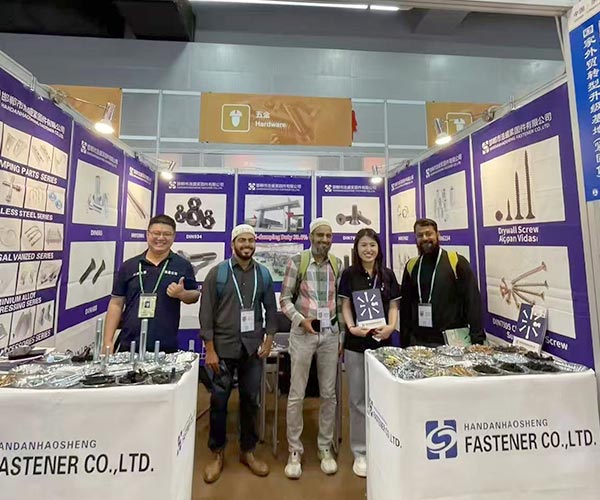
When purchasing in bulk, the Mill Test Report (MTR) is your best friend. This document provides the chemical heat analysis and the results of the mechanical tests performed on that specific lot of steel. A professional supplier should be able to provide these reports upon request, ensuring that the hex bolt screw you receive matches the technical requirements of your design.
By focusing on the search for “commercial intent” and “technical accuracy,” procurement professionals can avoid the hidden costs of fastener failure. Customization is also a key factor; sometimes a non-standard thread pitch or a specific flange head design is necessary to distribute load more effectively than a standard bolt.
Conclusion
The mechanical properties of a high-tensile alloy steel hex bolt screw represent a sophisticated balance of metallurgy and manufacturing precision. From the tensile strength of Grade 12.9 to the fatigue resistance of rolled threads, every technical specification serves a purpose. By selecting the correct grade and ensuring proper surface treatment, you ensure that your industrial projects remain secure for decades to come.
FAQ
What is the difference between yield strength and tensile strength?
Tensile strength is the maximum stress a hex bolt screw can handle before it breaks completely. Yield strength is the point at which the bolt deforms and will not return to its original shape once the load is removed.
Why should I choose Grade 10.9 over Grade 12.9?
While Grade 12.9 is stronger, Grade 10.9 offers better ductility and is less sensitive to hydrogen embrittlement. It is often the safer choice for applications involving vibration or environmental exposure.
How do I know if my bolts have been heat treated correctly?
The most reliable way is to check the head marking for the property class and request a Mill Test Report (MTR) from your supplier, which lists the hardness and tensile test results for that specific batch.
Does the finish of the bolt affect its mechanical properties?
The finish itself does not change the steel’s strength, but processes like electroplating can introduce risks like hydrogen embrittlement, which must be managed through specialized baking processes.
Can I reuse a high tensile hex bolt screw?
In critical structural applications, it is generally recommended to use new bolts. Once a bolt has been tightened to its proof load, it may have undergone subtle changes that make its performance unpredictable if reused.
Need Help Choosing the Right Hex Bolt Screw?
If you’re unsure about which grade, material, or surface finish of hex bolt screw is best for your specific industrial application, our experts are here to help. Contact us today for a personalized consultation, and ensure your fastening system is reliable and meets the highest safety standards. Don’t wait until a failure occurs—get in touch now to protect your machinery and your project integrity!
 English
  Spanish
  Arabic