
In industrial projects, industrial fasteners are often the smallest components—but they carry the highest responsibility. Whether in construction, machinery, pipelines, or energy systems, the performance of the entire assembly depends on the correct selection of bolts, nuts, screws, and other fastening elements.
A poor fastener choice can lead to loosening, corrosion, fatigue failure, or even catastrophic structural damage. On the other hand, a well-selected fastener improves safety, reduces maintenance costs, and ensures long-term reliability.
This industrial fasteners buying guide provides a professional, practical framework to help engineers, procurement teams, and project managers choose the right fasteners for their applications.
Table of Contents
What Are Industrial Fasteners?
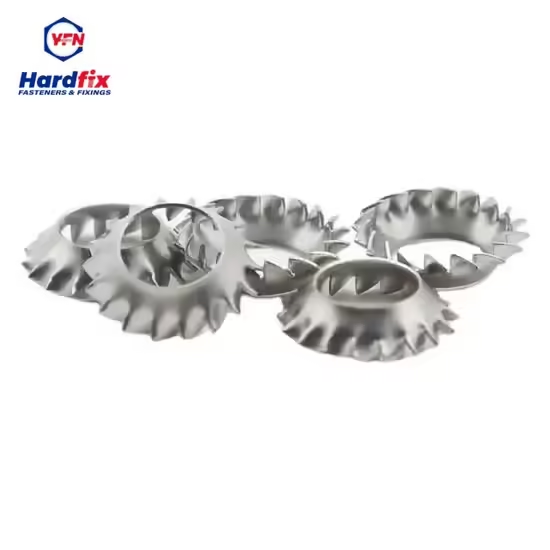
Industrial fasteners are mechanical components used to join or secure two or more objects together. They are essential in almost every industry, including construction, automotive, oil and gas, heavy machinery, and pipeline systems.
Common Types of Fasteners
- Bolts (hex bolts, heavy hex bolts, anchor bolts)
- Nuts (hex nuts, lock nuts)
- Screws (machine screws, self-tapping screws)
- Washers (flat washers, spring washers)
- Stud bolts (used in flange connections)
Each type serves a specific function depending on load requirements, assembly conditions, and design constraints.
Key Factors to Consider When Buying Industrial Fasteners
Selecting industrial fasteners requires more than choosing size and quantity. Below are the most important technical factors to evaluate.
1. Load and Strength Requirements
Understanding the load conditions is the first step.
Fasteners must withstand:
- Tensile loads (pulling force)
- Shear loads (side force)
- Dynamic loads (vibration and fatigue)
Strength grades such as 8.8, 10.9, and 12.9 define the mechanical performance of fasteners.
Key Insight:
Higher strength grades are not always better—they must match the application requirements to avoid brittleness or overdesign.
2. Material Selection
Material determines both strength and environmental resistance.
Common Materials
- Carbon steel: high strength, cost-effective
- Alloy steel: enhanced strength and durability
- Stainless steel: excellent corrosion resistance
- Duplex stainless steel: high strength + corrosion resistance
Selection Tip:
- Use alloy steel for heavy-duty applications
- Use stainless steel in corrosive environments
3. Corrosion Resistance and Coating
Environmental exposure plays a major role in fastener performance.
Common Coatings
- Zinc plating: basic protection
- Hot-dip galvanizing: excellent outdoor protection
- Dacromet coating: advanced corrosion resistance
- PTFE coating: chemical resistance
Key Insight:
Corrosion is one of the leading causes of fastener failure. Always match coating to environment.
4. Size, Thread Type, and Standards
Fasteners must comply with industry standards for compatibility and safety.
Key Considerations
- Diameter and length
- Thread type (coarse vs fine)
- Standards (ISO, DIN, ASTM)
Thread Selection
- Coarse thread: easier installation, better for softer materials
- Fine thread: higher strength and better vibration resistance
5. Application Environment
Consider where and how the fastener will be used:
- Outdoor vs indoor
- High temperature environments
- Chemical exposure
- High vibration conditions
Example:
- Marine environments → stainless steel
- Heavy machinery → alloy steel with coating
6. Installation and Torque Requirements
Proper installation is as important as selection.
- Correct torque ensures proper preload
- Prevents loosening under vibration
- Improves fatigue resistance
Using calibrated tools and following torque specifications is essential.
Comparison Table: Fastener Selection Overview
| Factor | Option | Advantages | Limitations | Recommended Use |
|---|---|---|---|---|
| Material | Carbon Steel | High strength, low cost | Corrosion risk | Indoor, structural |
| Material | Stainless Steel | Corrosion resistant | Lower strength | Outdoor, marine |
| Strength Grade | 8.8 | Balanced performance | Limited for heavy load | General use |
| Strength Grade | 10.9 | High strength | Higher cost | Machinery |
| Strength Grade | 12.9 | Very high strength | Brittle risk | High-stress systems |
| Coating | Galvanized | Durable protection | Thick layer | Outdoor use |
| Coating | Zinc Plated | Smooth finish | Limited protection | Indoor use |
Application-Based Fastener Selection
Choosing the right fastener depends heavily on the industry and application.
Construction and Structural Engineering
- Use high-strength bolts (8.8 or 10.9)
- Focus on load-bearing capacity and safety standards
Pipeline and Flange Systems
- Use stud bolts with high corrosion resistance
- Ensure proper sealing and pressure resistance
Heavy Machinery and Equipment
- Use alloy steel fasteners (10.9 or 12.9)
- Consider vibration and fatigue resistance
Oil, Gas, and Energy Industry
- Use corrosion-resistant materials
- Ensure compliance with industry standards
Common Mistakes to Avoid When Buying Fasteners
Choosing Based on Price Alone
Low-cost fasteners may fail early and increase long-term costs.
Ignoring Environmental Conditions
Using standard carbon steel in corrosive environments leads to rapid failure.
Over-Specifying Strength
Using excessively high-grade fasteners can increase cost and risk of brittle failure.
Poor Supplier Selection
Unreliable suppliers may provide inconsistent quality or non-compliant products.
How to Choose a Reliable Fastener Supplier
A good supplier should offer more than just products.
Look for:
- Compliance with ISO, DIN, ASTM standards
- Material traceability
- Quality certifications
- Custom manufacturing capability
- Technical support and engineering advice
A professional supplier can help optimize your selection and reduce project risks.
Expert Insight: Manufacturer Perspective


From a manufacturing standpoint, the most successful projects follow a structured selection approach:
- Define load requirements
- Identify environmental conditions
- Select appropriate material and grade
- Choose correct coating and installation method
In many industrial projects, combining different fastener types and materials provides the best balance between performance and cost.
Conclusion
Buying industrial fasteners is not just a procurement task—it is a technical decision that directly impacts safety, performance, and cost.
By understanding load requirements, material properties, environmental conditions, and installation practices, you can select fasteners that deliver reliable performance over the long term.
A strategic approach to fastener selection reduces risk, improves efficiency, and ensures the success of your project.
FAQ
What are the most commonly used industrial fasteners?
Bolts, nuts, screws, and washers are the most widely used fasteners in industrial applications.
How do I choose the right fastener material?
Select material based on load requirements and environmental conditions, especially corrosion exposure.
Are high-strength fasteners always better?
No. They should only be used when required, as they may increase cost and installation complexity.
What causes fastener failure?
Common causes include corrosion, overloading, fatigue, and improper installation.
Can fasteners be customized?
Yes. Many manufacturers offer custom sizes, materials, and coatings for specific applications.
Need Help Choosing the Right Industrial Fasteners?
If you’re unsure which industrial fasteners are best for your application, our team is here to help. We provide expert guidance, custom solutions, and high-quality manufacturing to meet your project requirements. Contact us today to get reliable fastening solutions designed for performance and durability.
 English
  Spanish
  Arabic