
Choosing the right bolt manufacturer is not just a procurement decision. It directly affects product safety, equipment performance, and long-term operational costs. Whether you are sourcing fasteners for construction, machinery, or industrial assembly, a poor supplier choice can lead to failures, delays, and unexpected expenses. On the other hand, a reliable bolt supplier becomes a long-term partner that supports your quality standards and growth.
In this guide, you will learn how to evaluate a bolt manufacturer from a professional and practical perspective, using real criteria that engineers and buyers rely on every day.
Table of Contents
Why Choosing the Right Bolt Manufacturer Matters

Fasteners may look simple, but they are critical load-bearing components. According to data published in the Mechanical Engineering Handbook, over 60 percent of mechanical failures are related to improper fastening or fastener quality issues. This means that your choice of bolt supplier has a direct impact on safety and durability.
If you are working in high-load or high-vibration environments, even small inconsistencies in bolt quality can lead to loosening, fatigue failure, or corrosion-related damage. A reliable bolt manufacturer ensures consistency, compliance, and traceability across every batch.
Key Qualities of a Reliable Bolt Manufacturer
Consistent Product Quality
A professional bolt manufacturer maintains strict quality control throughout production. This includes raw material inspection, in-process monitoring, and final testing. Look for manufacturers that follow international standards such as ISO or ASTM for dimensional accuracy and mechanical performance.
Consistency is more important than occasional high quality. You need every batch to perform the same way, especially in large-scale projects.
Material Traceability and Certification
Material quality is the foundation of any bolt. A trustworthy bolt manufacturer should provide full traceability, including material certificates and heat treatment records.
For example, stainless steel bolts should include documentation confirming chemical composition and corrosion resistance. According to ASM International material data, even small variations in alloy composition can significantly affect corrosion resistance and tensile strength.
Manufacturing Capabilities
Not all bolt manufacturers have the same production capabilities. Some focus on standard fasteners, while others specialize in custom solutions.
You should evaluate:
- Available sizes and thread types
- Capability for custom bolts
- Heat treatment processes
- Surface finishing options such as plating or coating
If your project requires non-standard specifications, working with a flexible bolt supplier is essential.
Comparing Bolt Manufacturer Capabilities
Below is a practical comparison table to help you evaluate different suppliers:
| Criteria | Basic Manufacturer | Advanced Manufacturer | Reliable Manufacturer |
|---|---|---|---|
| Material Certification | Limited | Available | Fully Traceable |
| Quality Control | Basic Inspection | Process Control | Full QC System |
| Customization | None | Partial | Full Custom Support |
| Production Capacity | Low | Medium | High and Scalable |
| Technical Support | Minimal | Moderate | Engineering Support |
| Lead Time Stability | Unstable | متوسط | Consistent |
This table shows that a reliable bolt manufacturer is not just about production, but about the entire system behind it.
Understanding Industry Standards and Compliance
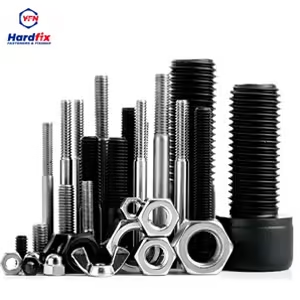
A professional bolt manufacturer follows recognized standards to ensure product reliability. These standards define dimensions, mechanical properties, and testing requirements.
Common standards include:
- ISO standards for general fasteners
- ASTM standards for structural bolts
- Mechanical property classifications such as 8.8, 10.9, or 12.9
According to data published in fastener engineering studies, using certified high-grade bolts can improve structural reliability by more than 30 percent in load-critical applications.
When evaluating a bolt supplier, always confirm which standards they follow and whether they can provide documentation.
The Role of Testing and Quality Assurance
Reliable bolt manufacturers invest in testing equipment and procedures. This includes:
- Tensile strength testing
- Hardness testing
- Salt spray testing for corrosion resistance
- Thread accuracy measurement
For example, salt spray testing is widely used to simulate corrosion conditions. According to ISO testing guidelines, coated fasteners that pass 500 to 1000 hours of salt spray testing are considered suitable for harsh environments.
Testing is not just a technical detail. It is your guarantee that the product will perform as expected in real-world conditions.
Customization and Engineering Support
In many industrial applications, standard bolts are not enough. You may need custom dimensions, coatings, or strength grades.
A reliable bolt manufacturer should be able to:
- Provide design suggestions
- Recommend suitable materials
- Optimize bolt geometry for your application
For example, in high-vibration machinery, engineers often recommend fine-thread bolts combined with locking mechanisms. A knowledgeable manufacturer can guide you toward these solutions instead of simply selling standard products.
Evaluating Communication and Responsiveness

Technical capability is important, but communication is equally critical. A reliable bolt manufacturer responds quickly, provides clear information, and understands your requirements.
You should pay attention to:
- Response time to inquiries
- Clarity of technical explanations
- Willingness to provide samples or documentation
In many cases, delays in communication can lead to delays in production. A responsive supplier helps you avoid these risks.
Pricing vs Value: What You Should Really Consider
Choosing the lowest price is one of the most common mistakes buyers make. Low-cost bolts may save money initially but can lead to higher costs due to failures, replacements, or downtime.
Instead of focusing only on price, consider:
- Product lifespan
- Reliability under load
- Maintenance frequency
- Risk of failure
According to procurement studies in industrial supply chains, total cost of ownership can be reduced by up to 25 percent when higher-quality fasteners are used.
Red Flags to Avoid When Choosing a Bolt Manufacturer
Not every supplier meets professional standards. Here are some warning signs:
- No material certification or unclear documentation
- Inconsistent product quality across batches
- Limited or no testing capabilities
- Poor communication or delayed responses
- Unrealistically low pricing
If you notice any of these issues, it is better to reconsider your supplier choice before problems arise.
Real-World Example: Why Manufacturer Choice Matters
Consider a manufacturing company that used low-cost bolts for assembling conveyor systems. Over time, bolts began loosening due to vibration, leading to frequent maintenance and unexpected downtime.
After switching to a reliable bolt supplier offering high-strength alloy bolts with proper surface treatment, the company reduced maintenance frequency by 40 percent and improved operational stability.
This example shows that the right bolt manufacturer can deliver measurable business value, not just better products.
How to Build a Long-Term Partnership with a Bolt Manufacturer
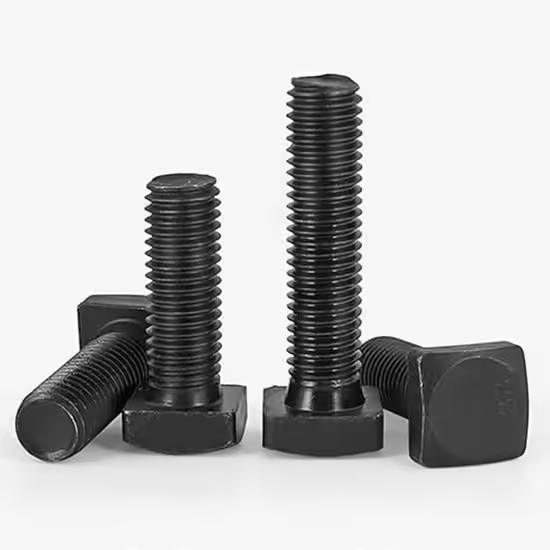

The best results come from long-term cooperation. Instead of changing suppliers frequently, build a relationship with a manufacturer that understands your needs.
You can do this by:
- Sharing detailed technical requirements
- Providing feedback on product performance
- Planning long-term orders for better consistency
A reliable bolt supplier becomes part of your supply chain strategy, not just a vendor.
Conclusion
Choosing a reliable bolt manufacturer requires more than comparing prices or product catalogs. It involves evaluating quality systems, material traceability, manufacturing capabilities, and technical support.
By focusing on long-term value instead of short-term cost, you can ensure that your fasteners perform reliably under real-world conditions. This not only improves safety but also reduces maintenance costs and operational risks.
When you take the time to choose the right bolt manufacturer, you are investing in the stability and success of your entire project.
FAQ
What does a bolt manufacturer do?
A bolt manufacturer produces fasteners used in construction, machinery, and industrial applications, ensuring they meet strength, size, and quality standards.
How do I choose a reliable bolt supplier?
You should evaluate quality control systems, material certifications, production capabilities, and the manufacturer’s ability to provide consistent products.
Can a bolt manufacturer provide custom fasteners?
Yes, many bolt manufacturers offer custom sizes, materials, coatings, and thread specifications based on your project requirements.
What certifications should a bolt manufacturer have?
A professional bolt supplier typically follows standards such as ISO or ASTM and provides material and testing certifications.
Why is quality important when selecting a bolt supplier?
High-quality bolts ensure safety, durability, and performance, reducing the risk of failure and long-term maintenance costs.
Need Help Choosing the Right Bolt Manufacturer?
If you’re unsure about which bolt manufacturer is best for your project or supply needs, our experts are here to help. Contact us today for a personalized consultation, and ensure your fasteners meet the highest standards of quality, strength, and reliability. Don’t wait until small issues turn into costly failures—get in touch now to secure your supply chain and keep your operations running smoothly!
 English
  Spanish
  Arabic