
Table of Contents
Square U bolts are widely used across structural, mechanical, and equipment-mounting applications because of their ability to grip and secure flat-sided components. If you work in machinery assembly, industrial construction, pipe installation, or heavy equipment maintenance, understanding how to select the right square U bolts is essential for safety, performance, and long-term reliability. This guide walks you through their functions, materials, dimensions, load considerations, common applications, and selection tips based on real engineering needs.
Understanding the Purpose of Square U Bolts

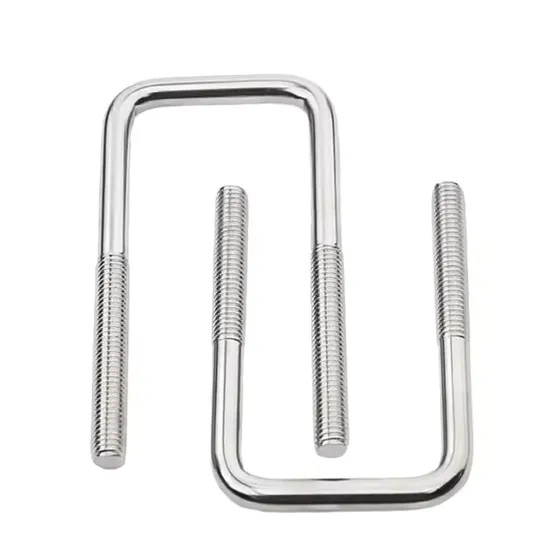
Square U bolts are bent into a 90-degree shape to fit around square or rectangular surfaces. Unlike round U bolts, which naturally match pipes or round bars, square U bolts create full-surface contact on flat structures. This significantly improves clamping stability and reduces rotational movement under vibration.
They are commonly used in pipe racks, metal frameworks, electrical installations, automotive frames, and vibration-sensitive equipment. According to multiple engineering hardware surveys, square U bolts are preferred for rectangular tubing because they distribute pressure more evenly, reducing long-term deformation.
Key Components and Dimensions
Every square U bolt has three critical dimensions that determine its fit and performance:
- Inside width (distance between legs)
- Leg length (height of each leg)
- Thread length (usable portion for nuts and washers)
Accurate measurement ensures that the bolt fits the target tubing without excessive pressure, which could cause deformation or slippage. Most industrial buyers underestimate the importance of thread length, yet insufficient threads reduce load-carrying capacity and limit secure tightening.
Square U bolts also vary by material, thread pitch, and bending radius, all of which play a role in performance.
Material Options and Their Performance
Material selection affects corrosion resistance, mechanical strength, and service life. Below is a practical comparison based on common engineering data.
| Material Type | Corrosion Resistance | Typical Use Cases | Notes |
|---|---|---|---|
| Carbon Steel | Low–Medium | Indoor machinery, structural mounting | Cost-effective but needs coating |
| Stainless Steel | High | Outdoor structures, marine-adjacent environments | Offers best longevity |
| Hot-Dip Galvanized Steel | Medium–High | Utility supports, pipe clamps | Thick zinc layer improves durability |
| Zinc-Plated Steel | Medium | General industrial applications | Suitable for moderate environments |
According to widely referenced material performance charts, stainless steel square U bolts provide the highest resistance against environmental degradation, particularly when exposed to moisture or chemical runoff.
Load Capacity Considerations

The load capacity of a square U bolt depends on:
- Material tensile strength
- Diameter of the bolt
- Tightening torque
- Environmental conditions
- Whether it is paired with load plates and washers
In industrial machinery, square U bolts are frequently used as clamp fasteners, meaning both shear loads and tensile loads must be evaluated. Increased vibration or movement can cause thread fatigue over time, making proper torque application and periodic inspection important.
Common Industrial Applications
Square U bolts are essential components in:
- Securing square and rectangular tubing
- Mounting pipes and conduits to support systems
- Attaching machinery components to structural frames
- Trailer, axle, and suspension connections
- Electrical and cable support assemblies
- Equipment stabilization for vibration-rich environments
Their versatility makes them a reliable choice for engineers seeking stable fastening solutions.
How to Choose the Right Size
Selecting the right square U bolt begins with measuring the tubing or structure it will secure. You’ll need to determine the inside width based on the outside dimension of the tubing, then select a leg length that allows sufficient thread engagement.
Key considerations include:
- Enough thread to accommodate washers, nuts, and plates
- Compatibility with dynamic loads
- Avoiding excessive compression of the tubing wall
Installation Best Practices
Proper installation significantly extends service life. Some practices to follow include:
- Applying correct torque levels recommended for the bolt diameter
- Using flat plates to distribute pressure when mounting heavy loads
- Avoiding overtightening to prevent thread stripping
- Adding locking washers or lock nuts in high-vibration settings
Well-executed installation reduces maintenance frequency and enhances safety.
Custom vs Standard Square U Bolts

Standard square U bolts cover most industrial applications, but custom manufacturing is often required when:
- Tubing dimensions are non-standard
- Special coatings or materials are needed
- Higher load-bearing performance is required
- Unique bending shapes or extended threads are necessary
Custom square U bolts give engineers tighter control over fit, performance, and project-specific parameters.
Troubleshooting Common Problems
If a square U bolt fails prematurely, it is typically due to:
- Corrosion from improper material selection
- Misalignment during installation
- Overload beyond the rated capacity
- Excessive vibration without locking hardware
Identifying the root cause helps prevent repeat failures and ensures better project reliability.
Conclusion
Square U bolts may seem simple, but selecting the right one requires understanding materials, dimensions, load requirements, and environmental factors. When chosen correctly, they provide secure, long-lasting fastening solutions in virtually every industrial setting.
Need Help Choosing the Right Square U Bolt? If you’re unsure which square U bolt is suitable for your machinery, structure, or pipe system, our engineering team is ready to assist. Contact us today for expert guidance, and ensure your fastening solution is safe, durable, and fully reliable. Don’t wait until issues arise—reach out now and let us support your next project with precision-engineered hardware!
FAQ
What are square U bolts used for?
Square U bolts are commonly used to secure pipes, tubes, and machinery components in industrial, automotive, and construction applications. They provide strong clamping force and precise alignment for square or rectangular profiles.
How do I choose the right size of square U bolt?
Select a square U bolt based on the pipe or component diameter, thread size, and required load capacity. Consider material type and environmental conditions such as corrosion resistance and temperature.
What materials are square U bolts made from?
Square U bolts are typically made from stainless steel, carbon steel, or galvanized steel. Stainless steel offers corrosion resistance, while carbon steel provides high strength at a lower cost.
Can square U bolts be used outdoors or in corrosive environments?
Yes, when made from corrosion-resistant materials such as stainless steel or hot-dip galvanized steel, square U bolts can withstand outdoor weather and mildly corrosive industrial environments.
How do I install square U bolts safely?
Ensure the component fits properly within the U shape, use washers to distribute load evenly, and tighten nuts gradually to the recommended torque. Avoid overtightening to prevent deformation of both the bolt and the clamped object.
 English
  Spanish
  Arabic