
Table of Contents
Introduction

Wing nut screws are an important component used in various industries to secure parts. This guide will take you through the types, sizes, and best methods for selecting and using wing nuts. Whether you are involved in construction, automotive, or DIY projects, understanding how to use wing nuts efficiently will make your work smoother and safer. We will also discuss the importance of proper torque and installation methods and provide a downloadable PDF chart for quick reference.
Wing Nuts: The Importance of Proper Usage
Wing nuts play a crucial role in ensuring that machinery and equipment stay secure. When wing nuts are not correctly tightened, they can result in mechanical failure or even accidents. According to OSHA data, improperly fastened parts lead to countless workplace accidents each year, causing serious injuries or fatalities. Proper installation and maintenance of wing nut screws are essential for preventing such occurrences.
OSHA Safety Reminder
OSHA regularly emphasizes the importance of fastening hardware and highlights that wing nuts, like all fasteners, should be tightened to the correct torque specifications to prevent machinery malfunctions. Regular inspection is key to maintaining a safe work environment.
5 Common Types of Wing Nut Screws & Their Uses

There are various types of wing nut screws available, each suited to specific environments and applications. Here’s a breakdown of the most common types:
1. Standard Cold-Formed Steel Wing Nuts
These wing nuts are the most commonly used due to their durability and affordability. Made from cold-formed steel, they provide a robust connection for general-purpose applications, from machinery to automotive parts.
2. 304/316 Marine-Grade Stainless Steel Wing Nuts
Marine-grade stainless steel wing nuts, such as those made from 304 or 316 stainless steel, are designed for use in highly corrosive environments. These are perfect for use in marine applications or any other industries exposed to high humidity and saltwater conditions.
3. Wing Nut/Screw Hybrid (Tool-Free)
This type combines the functionality of both wing nuts and wing screws, allowing for easy hand-tightening without the need for additional tools. This hybrid is particularly useful in environments where quick adjustments are needed.
4. Plastic/Nylon Wing Nuts (Light-Duty)
Plastic or nylon wing nuts are lightweight and resistant to corrosion, making them ideal for light-duty applications. They’re often used in industries where weight is a concern or where corrosion-resistant properties are important, but high strength isn’t required.
5. High-Strength Alloy Wing Nuts (Grade 10.9)
For heavy-duty applications, high-strength alloy wing nuts are the go-to choice. Rated to Grade 10.9, these wing nuts provide the necessary strength to secure critical components in industries such as aerospace, automotive, and heavy machinery.
Wing Nuts vs. Wing Screws—A Quick Comparison Table
Here’s a quick comparison to highlight the differences between wing nuts and wing screws, making it easier for you to choose the best option for your needs.
| Feature | Wing Nut | Wing Screw |
|---|---|---|
| Tool Requirement | No | Yes |
| Material Options | Steel, Stainless Steel, Nylon | Steel, Stainless Steel |
| Strength Rating | Moderate to High | High |
| Ideal Applications | General, Light to Medium Duty | Heavy Duty, Structural |
| Ease of Use | Easy (hand-tightening) | Requires Tool |
| Corrosion Resistance | Moderate to High | Moderate to High |
| Cost | Affordable | Generally more expensive |
How to Measure Wing Nut Screw Size (Step-by-Step Guide)
Understanding how to measure wing nut screws correctly is vital for choosing the right one for your project. Here’s how you can measure the size properly:
- Thread Diameter: Measure the outer diameter of the threads using a caliper. This is the width across the threads and determines the size of the bolt or screw.
- Wing Spread: Measure the distance between the tips of the wings to ensure they fit within the desired space.
- Height: Measure from the base of the nut to the top of the wings.
Download Section
We have provided a free PDF download containing a comprehensive “Wing Nut Screw Size and Torque Chart.” This chart includes detailed information on various wing nut sizes and the corresponding torque requirements for different materials. Download the PDF to ensure you’re always working with the correct specifications.
Installation and Torque Best Practices

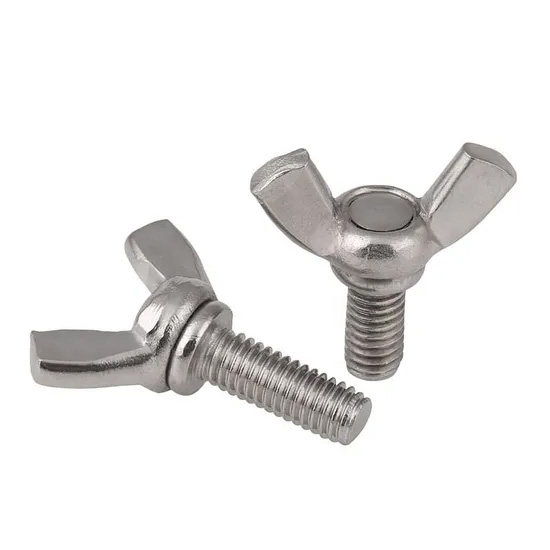
Proper installation of wing nuts is crucial for securing components and preventing failures. Here’s a step-by-step guide on best practices:
- Hand-Tighten First: Start by tightening the wing nut by hand. This ensures that the threads are properly aligned.
- Use a 1/4 Turn Rule: After hand-tightening, use a wrench or torque tool to tighten the wing nut for an additional 1/4 turn. This helps ensure a secure fit without overtightening.
- Salt Spray Test: For marine or outdoor applications, wing nuts should be tested for corrosion resistance.
Conclusion
Wing nut screws are critical in many industrial and mechanical applications, ensuring safety, functionality, and ease of use. Whether you are using lightweight plastic wing nuts or high-strength alloy wing nuts, choosing the right product is essential to the success of your project. For consultation, please contact Haosheng to obtain a quote for our high-quality wing nuts and other fasteners. Our products are designed to provide the highest reliability and performance under any conditions.
FAQ
Can Wing Nut Screws Be Reused?
Yes, wing nut screws can be reused, provided they have not been damaged or worn out. Regular inspection of the threads and wings is necessary to ensure they still function correctly.
What Is the Maximum Torque for Stainless Steel M8 Wing Nuts?
For an M8 stainless steel wing nut, the maximum recommended torque is around 15-20 Nm (Newton-meters). Always follow the manufacturer’s torque specifications for optimal performance.
How Do I Know Which Material Is Best for My Wing Nut Screws?
Choosing the right material depends on your application’s environment. For standard indoor or light-duty use, cold-formed steel or plastic wing nuts are typically sufficient. However, for applications exposed to corrosive environments, such as marine or outdoor settings, it’s best to opt for 304 or 316 stainless steel wing nuts, which offer superior corrosion resistance. For heavy-duty applications, high-strength alloy wing nuts provide the necessary durability and strength to handle significant stress. Always consider the conditions in which the wing nuts will be used to ensure the material chosen will meet your needs.
 English
  Spanish
  Arabic